

JW Masonic Education: The Architecture of the Apron, From Kemet to Cook No. 10
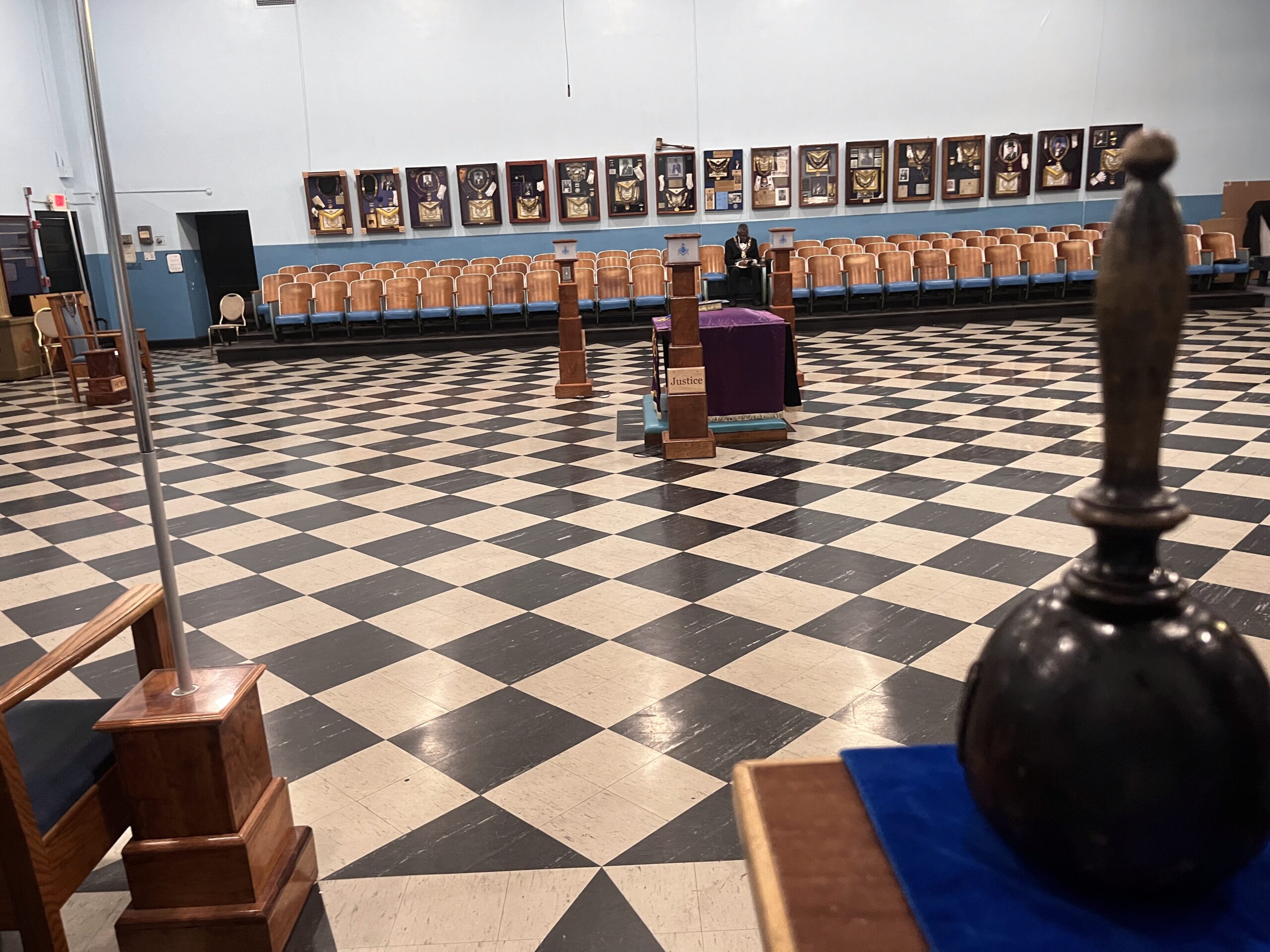
At a recent communication, John F. Cook Lodge No. 10 was blessed with an illuminating Masonic Education presentation, masterfully delivered by our esteemed Junior Warden, Brother Kiel Byrne. His profound discourse, titled “The Architecture of the Apron: From Kemet to Cook #10,” transcended the usual boundaries of Masonic instruction, inviting brethren to delve into the ancient roots and spiritual significance of our emblematic lambskin apron. The dignified posture and attentive faces of the brethren, as captured in the accompanying images, reflected the deep engagement with this timely lesson.
Beyond the Badge: Unveiling Ancient Wisdom
Brother Byrne challenged the brethren to look beyond the apron simply as the “badge of a Mason.” He guided us on a journey back to the Nile Valley, to Ancient Kemet, revealing the spiritual power hidden within its geometry. This journey underscored our lodge’s commitment to ritualistic soundness and deeper understanding, moving past surface-level instruction to explore the rich history that defines Prince Hall Masonry as the “gatekeeper of our culture.”
The Historical Prototype: The Shendyt and the Sacred Geometry
The presentation revealed that the Masonic apron is not a modern innovation but a direct descendant of the ancient Egyptian Shendyt (or Shenti). This ceremonial kilt, worn by Pharaohs and high priests, was a symbol of an initiate who had mastered the “Ancient Mysteries,” serving as a bridge between the divine and the earthly.
Brother Byrne then meticulously broke down the sacred geometry embedded within the apron:
- The Triangle (3): Represents our spiritual self, higher consciousness, and the divine spark within.
- The Square (4): Symbolizes the physical world – our body, the material earth, and the four classical elements.
- The Seven (7): The combination of 3 and 4, representing the “perfected man” – a spiritual being successfully inhabiting a physical body.
The Flap: A Symbol of At-One-Ment
A particularly striking aspect of the education was the explanation of the apron’s flap. For an Entered Apprentice, the flap worn up signifies the spirit hovering, searching for its place. However, for a Master Mason, the flap is dropped. This is not a demotion, but a powerful symbol of “at-one-ment” – the moment when the spirit (the triangle) descends into the material world (the square) to take control. This represents the practical application of Ma’at: truth, balance, and cosmic order, where spiritual values actively govern physical life. The brethren, clad in their aprons and white gloves, exemplified this very principle of readiness for service and spiritual alignment, as illustrated in the visual records of the evening.
The 2026 Reality Check: Integrating Spirit into Action
Brother Byrne brought this ancient wisdom squarely into the present, asking, “Why does this matter for John F. Cook Lodge No. 10 today?” He referenced the warning that our jurisdiction faces a “going-out-of-business model” if we continue to focus solely on the “Square”—the material aspects of lodge operations like building maintenance and logistics—while neglecting to “fold the ‘Triangle’ down into our actual work.”
This resonated deeply with Worshipful Master Lemuel F. Howard IV’s 2026 theme: “All Hands-on Deck, Building Bonds Internally and Externally.” Brother Byrne eloquently argued that this theme requires more than just physical attendance; it demands integrating our spiritual light into our community service, mentorship to the youth, and the very brotherhood we share. To truly thrive and attract the next generation, we must offer more than a social club; we must be “Sons of Maat,” demonstrating to the D.C. community that our physical actions are guided by spiritual integrity.
The profound Masonic Education delivered by Junior Warden Kiel Byrne was a powerful reminder of our rich heritage and our future responsibilities. It called upon every brother to drop the flap, put our values into action, and get to work saving our legacy, upholding the principles of brotherly love, relief, and truth that John F. Cook Jr. himself championed.